
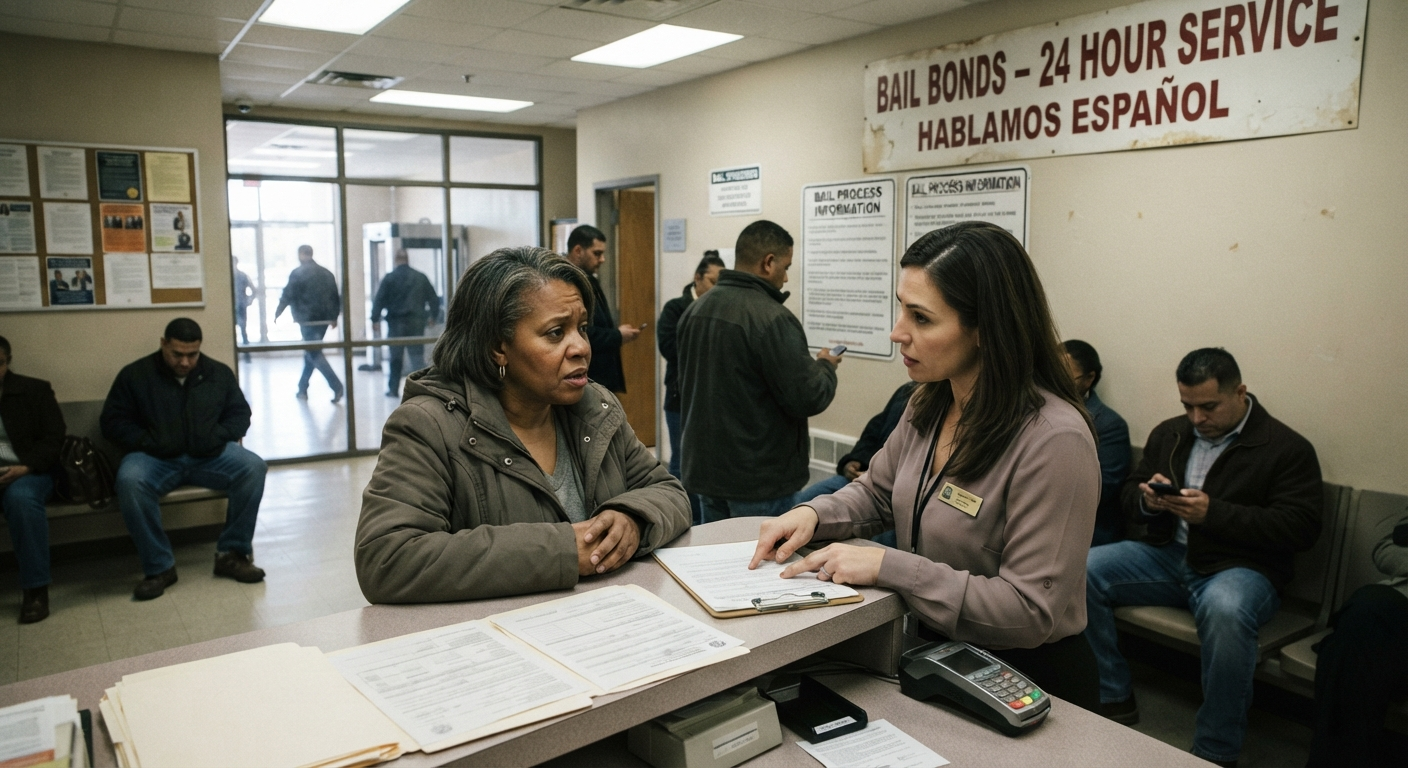
Immigration Bail Cases: Rules & Solutions 2026
If you or someone you know is being held under UK immigration powers, understanding immigration bail can be extremely important.
Immigration bail can allow a person who is detained, or who is liable to detention, to remain outside detention while their immigration matter continues, subject to conditions.
Immigration bail is different from criminal bail. It operates under the immigration system and is generally connected with matters such as immigration control, removal, deportation or unresolved immigration status.
Being granted immigration bail does not necessarily mean that a person’s immigration case has been resolved. The person may still have to report regularly, live at a specified address, comply with monitoring requirements or follow other conditions.
This guide explains what immigration bail is, who can apply, how the application process works, what evidence can strengthen a bail case, what conditions may apply, what happens at a bail hearing, and what to do if bail is refused in 2026.
Quick Summary
| Immigration Bail Requirement | What You Need to Know |
|---|---|
| Immigration bail | A mechanism allowing eligible people to be released from immigration detention or remain outside detention subject to conditions |
| Main legal framework | Schedule 10 to the Immigration Act 2016 |
| Who can apply? | People held on immigration matters may be able to apply |
| Secretary of State bail | Can generally be applied for from the first day of arrival in the UK |
| First-tier Tribunal bail | Generally available where the person arrived in the UK more than 8 days ago |
| Bail conditions | At least one condition must normally be attached |
| Common condition | Reporting or appearing before the relevant authority |
| Accommodation | A stable place to stay can strengthen an application |
| Financial Condition Supporter | May support the application in appropriate cases |
| Refused bail | A further application may be restricted for 28 days unless circumstances significantly change |
| Legal representation | A solicitor or legal adviser can help prepare the case |
The key principle to remember is:
Immigration bail is not the end of an immigration case. It is a form of release subject to conditions while the underlying immigration matter continues.
What Is Immigration Bail?
Immigration bail is a legal mechanism under which a person can be released from immigration detention or remain outside detention while being subject to specified conditions.
The current framework is contained in Schedule 10 to the Immigration Act 2016.
Home Office guidance states that there is a presumption in favour of immigration bail and that alternatives to detention should be used wherever possible.
Immigration bail may be relevant where a person:
- Is currently detained under immigration powers
- Is liable to detention
- Is awaiting removal
- Is involved in deportation proceedings
- Has an unresolved immigration matter
- Needs to remain in contact with immigration authorities
The exact legal position depends on the individual’s circumstances.
Is Immigration Bail the Same as Criminal Bail?
No.
Immigration bail and criminal bail operate under different legal systems.
| Feature | Immigration Bail | Criminal Bail |
|---|---|---|
| Main area | Immigration law | Criminal law |
| Main purpose | Immigration control and management | Managing a person accused of an offence |
| Common authority | Home Office / First-tier Tribunal | Police or criminal courts |
| Main issue | Immigration status, detention or removal | Criminal investigation or proceedings |
| Conditions | Reporting, residence and other immigration conditions | Conditions linked to criminal proceedings |
| Underlying case | Immigration matter may continue | Criminal investigation or prosecution may continue |
A person should therefore understand which type of bail applies to their situation.
Who Can Apply for Immigration Bail?
A person may be able to apply for immigration bail if they are being held on immigration matters.
GOV.UK states that a person can apply whether they are held in an immigration removal centre, detention centre or prison, provided the detention is on immigration matters.
The availability and procedure depend on the person’s circumstances.
Factors may include:
- Where the person is being held
- When they arrived in the UK
- Their immigration status
- Whether removal or deportation action is ongoing
- Previous bail applications
- Any existing bail conditions
- Whether there are national security or other exceptional considerations
Who Decides Immigration Bail?
There are two main routes for immigration bail.
Secretary of State Bail
A person can apply to the Home Secretary for immigration bail.
This is commonly referred to as Secretary of State bail.
According to GOV.UK, an application can be made from the first day the person arrives in the UK. The application is generally made using form BAIL401 and is decided by Home Office staff without a tribunal hearing.
First-tier Tribunal Bail
A person may also be able to apply to the First-tier Tribunal (Immigration and Asylum Chamber).
GOV.UK states that this route is available where the person arrived in the UK more than 8 days previously.
The application is made using form B1, and an independent judge decides the application at a hearing.
What Is the First-tier Tribunal?
The First-tier Tribunal (Immigration and Asylum Chamber) is an independent tribunal that deals with certain immigration and asylum matters.
For immigration bail cases, a judge can consider whether the detained person should be released subject to appropriate conditions.
A bail hearing will normally involve consideration of:
- The person’s circumstances
- The reasons for detention
- Risk of absconding
- Previous compliance
- Proposed accommodation
- Financial Condition Supporters
- Immigration history
- Removal prospects
- Any other relevant circumstances
The Home Office may provide a Bail Summary explaining why it believes bail should or should not be granted. GOV.UK states that the person should receive a copy of this document.
When Should You Apply for Immigration Bail?
There is no need to wait until a person has been detained for a particular number of months before considering bail.
A person may be able to apply depending on their circumstances.
GOV.UK states that Secretary of State bail can be applied for from the first day of arrival in the UK, while First-tier Tribunal bail is generally available once the person has been in the UK for more than 8 days.
A detained person should therefore obtain legal advice as early as possible where appropriate.
Automatic Bail Referral
In certain circumstances, the Home Office may automatically refer a detained person to the First-tier Tribunal for a bail hearing.
GOV.UK states that automatic referral can apply where:
- The person has been detained for 4 months or more
- They are not detained in the interests of national security
- Deportation action is not being taken
- They have not applied for First-tier Tribunal bail within the previous 4 months
The Home Office may make the application on the person’s behalf.
Automatic referral does not prevent a person from considering their own bail application where permitted.
What Makes a Strong Bail Case?
There is no guaranteed formula for success.
However, a well-prepared bail application should address the issues that are relevant to the person’s individual circumstances.
Important evidence may include:
- A stable accommodation address
- Evidence of family relationships
- Evidence of community ties
- Previous compliance with immigration requirements
- Evidence explaining previous non-compliance
- Financial Condition Supporter information
- Immigration documents
- Medical evidence where relevant
- Evidence relating to pending applications or appeals
- Information about removal prospects
The application should be clear, consistent and supported by evidence.
Why Is Accommodation Important?
Having somewhere suitable to live can be an important part of a bail application.
GOV.UK specifically states that a person is more likely to get bail if they have a place to stay.
Evidence might include:
- Tenancy agreement
- Letter from the person providing accommodation
- Proof of address
- Utility bill
- Council documentation
- Other evidence showing that the proposed accommodation is genuine
The exact evidence required can vary depending on the circumstances.
What Is a Financial Condition Supporter?
A Financial Condition Supporter is someone who may provide financial support connected with the person’s immigration bail conditions.
GOV.UK explains that a Financial Condition Supporter may agree to pay money if the person does not comply with their bail conditions and may need to attend the bail hearing.
Where appropriate, providing complete and accurate information about a Financial Condition Supporter can strengthen the application.
The person should understand the financial implications before agreeing to act as a supporter.
What Conditions Can Be Attached to Immigration Bail?
Immigration bail is normally subject to at least one condition.
Possible conditions can include:
- Reporting requirements
- Residence conditions
- Restrictions on work, occupation or study
- Requirements to appear before the Secretary of State or tribunal
- Electronic monitoring where applicable
- Other conditions permitted under the immigration bail framework
Home Office guidance confirms that immigration bail conditions can include requirements relating to appearance, residence, reporting and restrictions on work, occupation or study.
The exact conditions depend on the individual case.
What Is a Reporting Condition?
A reporting condition requires a person to maintain contact with immigration authorities in a specified way.
For example, a person may be required to:
- Report at a specified location
- Report at specified intervals
- Provide updated contact information
- Comply with digital reporting arrangements where applicable
The person should carefully check the exact terms of their bail.
Missing a reporting requirement can create serious problems.
Can Immigration Bail Include Electronic Monitoring?
In some circumstances, electronic monitoring can form part of immigration bail arrangements.
The use of electronic monitoring depends on the applicable rules, circumstances and policy.
The Home Office has specific guidance dealing with electronic monitoring as an immigration bail condition.
A person should not assume that every immigration bail applicant will be subject to electronic monitoring.
Can Bail Conditions Be Changed?
Bail conditions can potentially be varied depending on the circumstances and applicable procedure.
A person may need to request a variation if, for example:
- Their address changes
- Their reporting arrangements become impractical
- Their circumstances significantly change
- A condition is no longer appropriate
- New evidence becomes available
The current Home Office immigration bail guidance specifically includes procedures for varying bail conditions.
A person should not simply stop complying with a condition because they believe it is unreasonable.
The correct procedure should be followed to request a change.
What Happens at a Bail Hearing?
A First-tier Tribunal bail hearing normally considers whether the person should be released and what conditions should apply.
The process may include:
Step 1: Bail Application
The applicant submits the appropriate bail application.
Step 2: Home Office Response
The Home Office may prepare a Bail Summary explaining its position.
Step 3: Evidence Review
The tribunal considers the evidence provided by the applicant and the Home Office.
Step 4: Risk Assessment
The judge may consider matters such as:
- Risk of absconding
- Previous compliance
- Criminal history where relevant
- Immigration history
- Removal prospects
- Accommodation
- Family circumstances
Step 5: Decision
The judge decides whether bail should be granted and what conditions should apply.
GOV.UK explains that bail hearings are generally held after the application is received and may take place by video link.
What If the Home Office Opposes Bail?
The Home Office may oppose a bail application.
Its reasons can depend on the circumstances.
Possible concerns may relate to:
- Risk of absconding
- Previous failure to comply with conditions
- Criminal history
- Removal arrangements
- Identity issues
- Lack of suitable accommodation
- Other immigration concerns
The applicant should address these concerns directly rather than ignoring them.
For example, if the Home Office claims there is a risk of absconding, the applicant may provide evidence of:
- Stable accommodation
- Family responsibilities
- Community connections
- Previous compliance
- A realistic reporting plan
The strength of the response depends on the evidence available.
What If Bail Is Refused?
A refusal does not necessarily mean that no future application is possible.
GOV.UK states that if bail was refused within the previous 28 days, another hearing will generally not take place unless the person’s situation has changed significantly.
If circumstances have changed, the new application should clearly explain what has changed.
Examples could include:
- New accommodation
- New evidence
- A significant change in immigration circumstances
- Changes in removal arrangements
- New family circumstances
- New medical evidence
- A change in the person’s compliance position
What If Removal Is Imminent?
A person may face additional difficulties if removal is scheduled.
GOV.UK states that where removal is due within 21 days after bail is granted, the Home Office may need to agree to the person’s release.
This makes the timing of a bail application particularly important.
Where removal is imminent, specialist legal advice should be obtained urgently.
Does Immigration Bail Stop Removal?
No.
Immigration bail does not automatically cancel or prevent removal.
A person may remain subject to removal action while on bail.
The underlying immigration case continues unless another legal decision changes the position.
A person on bail must therefore continue complying with all requirements and obtain legal advice about any removal-related issues.
Does Immigration Bail Mean You Can Stay Permanently?
No.
Immigration bail is not the same as being granted immigration permission.
A person may be released on bail while still having no lawful basis to remain permanently in the UK.
Their underlying immigration matter may continue.
Depending on the circumstances, this could involve:
- An immigration application
- An appeal
- An asylum claim
- Deportation proceedings
- Removal arrangements
- Other legal proceedings
What Evidence Should Be Prepared?
A strong application should be supported by relevant documents.
Identity Documents
Collect:
- Passport
- Identity documents
- Birth certificate
- Other identification
Immigration Documents
Collect:
- Visa documents
- Home Office letters
- Refusal decisions
- Appeal documents
- Previous bail decisions
- Reporting documents
Accommodation Evidence
Collect:
- Tenancy agreement
- Proof of address
- Letter from the accommodation provider
- Supporting documents
Family Evidence
This may include:
- Marriage certificate
- Birth certificates
- Evidence of children
- Evidence of caring responsibilities
- Evidence of shared residence
Financial Support Evidence
Where a Financial Condition Supporter is proposed, collect the relevant information and supporting documents.
Medical Evidence
Where health or vulnerability is relevant, appropriate medical evidence should be provided.
Immigration Bail and Family Circumstances
Family circumstances can be important in some bail cases.
For example, the person may have:
- Children in the UK
- A spouse
- A partner
- Dependent relatives
- Caring responsibilities
The application should explain the person’s actual role within the family.
Where relevant, evidence can include:
- Birth certificates
- School documents
- Medical records
- Proof of shared address
- Evidence of financial support
- Statements from family members
The existence of family members does not automatically guarantee bail.
The evidence needs to explain why the family circumstances are relevant to the case.
Immigration Bail and Vulnerability
Vulnerability may also be relevant.
Circumstances could include:
- Serious health conditions
- Mental health difficulties
- Disability
- Trauma
- Experience of torture
- Human trafficking concerns
- Other significant vulnerabilities
Where vulnerability is relevant, it should be properly documented.
The Home Office’s detention guidance requires individual circumstances to be considered and contains specific safeguards relating to vulnerable people and other special cases.
Immigration Bail and Criminal History
A criminal record does not automatically prevent someone from applying for immigration bail.
However, criminal history can be highly relevant to the assessment of risk.
The Home Office guidance explains that particular weight may be given to risks of reoffending or harm to the public in serious offender cases.
Where a criminal record exists, a bail application should address the relevant circumstances honestly and carefully.
Previous Bail Conditions
Previous compliance can be important.
For example, if a person previously:
- Failed to report
- Changed address without permission
- Breached another condition
- Failed to attend an appointment
the Home Office may raise this at a later bail application.
The applicant should explain the circumstances and provide evidence where possible.
Ignoring previous non-compliance can weaken an application.
What If Someone Has Never Had Bail Before?
A first bail application should still be prepared carefully.
The applicant should establish:
- Where they will live
- How they will comply
- Who will support them
- Their immigration position
- Their previous compliance
- Any relevant family or medical circumstances
A first application is an opportunity to present a complete picture of the person’s circumstances.
Common Immigration Bail Mistakes
1. Applying Without a Clear Address
A lack of suitable accommodation can make the application more difficult.
2. Ignoring the Bail Summary
If the Home Office opposes bail, its reasons should be addressed directly.
3. Providing Incomplete Evidence
Important documents should be collected before the application where possible.
4. Giving Inconsistent Information
Information about identity, address, immigration history and family circumstances should be accurate.
5. Ignoring Previous Bail Breaches
Previous non-compliance should be explained rather than hidden.
6. Assuming Family in the UK Guarantees Bail
Family connections may be relevant, but they do not automatically guarantee release.
7. Failing to Understand Bail Conditions
A person must understand exactly what conditions apply after release.
8. Missing Reporting Requirements
Failure to report can lead to further immigration problems.
9. Waiting Until Removal Is Imminent
If removal is approaching, there may be additional complications.
10. Treating Bail as the End of the Case
Release on bail does not necessarily resolve the underlying immigration matter.
Immigration Bail Checklist
Before submitting a bail application, check:
- Identity documents are available
- Immigration history has been reviewed
- Detention paperwork has been collected
- Current Home Office correspondence is available
- A proposed accommodation address is identified
- Accommodation evidence has been prepared
- Family evidence has been collected where relevant
- Medical evidence has been collected where relevant
- Previous bail decisions have been reviewed
- Previous compliance has been considered
- Any previous breaches have been explained
- Financial Condition Supporter information is available where applicable
- Current immigration applications are identified
- Appeals are identified
- Removal arrangements are understood
- Proposed bail conditions are realistic
- Legal advice has been obtained where appropriate
How to Prepare a Strong Bail Application
Step 1: Understand the Immigration Position
Identify exactly why the person is detained and what immigration action is ongoing.
Step 2: Review Previous History
Check:
- Previous applications
- Refusals
- Appeals
- Reporting history
- Previous bail
- Previous breaches
Step 3: Prepare Accommodation
Identify a realistic address and collect supporting evidence.
Step 4: Identify a Financial Condition Supporter
Where appropriate, identify someone who can act as a supporter and understand their responsibilities.
Step 5: Gather Supporting Evidence
Collect documents supporting:
- Identity
- Family
- Accommodation
- Medical circumstances
- Compliance
- Immigration history
Step 6: Address Home Office Concerns
If there are known concerns about absconding, compliance or removal, address them directly.
Step 7: Submit the Correct Application
Use the appropriate process for Secretary of State bail or First-tier Tribunal bail.
Step 8: Prepare for the Hearing
Where a tribunal hearing is required, make sure the evidence and arguments are organised.
Step 9: Follow the Decision
If bail is granted, follow every condition.
If bail is refused, understand the reasons and consider whether circumstances have changed.
What Happens After Bail Is Granted?
Release is only one stage of the immigration process.
After release, the person may need to:
- Report as required
- Live at the specified address
- Follow monitoring requirements
- Attend immigration appointments
- Attend tribunal hearings
- Respond to Home Office correspondence
- Continue with an immigration application or appeal
- Remain available for future immigration action
Failure to comply can have serious consequences.
Can Bail Conditions Be Removed?
Conditions may sometimes be varied or changed where the circumstances justify it.
For example, a person may need to request a change because:
- They have moved
- Their reporting location is no longer practical
- Their circumstances have changed
- A condition is causing a significant difficulty
- New evidence is available
The correct legal process should be followed.
A person should not simply stop complying with an existing condition.
Immigration Bail Example
Imagine a person has been detained following an unsuccessful immigration application.
They have a family member in the UK and a stable address where they can live if released.
The first step would be to review:
- Why the person was detained
- Their immigration history
- Whether removal is planned
- Whether travel documents are available
- Any pending appeal or application
- Previous reporting history
The family may then provide:
- Proof of accommodation
- Evidence of the family relationship
- Identity documents
- Supporting statements
- Relevant Home Office correspondence
If appropriate, a Financial Condition Supporter may also be identified.
A legal representative can then assess the appropriate bail route and prepare the application.
This example demonstrates why immigration bail applications should be based on the individual’s actual circumstances rather than a generic template.
Immigration Bail Process: Simple Overview
The process can generally be understood as:
Detention / Liability to Detention → Legal Review → Evidence Gathering → Bail Application → Home Office Response → Hearing Where Applicable → Bail Decision → Compliance With Conditions
The exact procedure can vary depending on the individual’s circumstances.
What If Bail Is Granted but Removal Is Still Pending?
The immigration case can continue after release.
The person may remain subject to immigration control and may still face removal if they have no legal basis to remain.
They should therefore continue obtaining appropriate legal advice and comply with all bail conditions.
Can a Solicitor Help With an Immigration Bail Case?
Yes.
A solicitor or qualified legal adviser can assist with:
- Reviewing detention
- Preparing a bail application
- Identifying relevant evidence
- Addressing Home Office objections
- Preparing for a tribunal hearing
- Reviewing previous bail decisions
- Advising on bail conditions
- Considering removal-related issues
- Reviewing other immigration options
The appropriate legal strategy depends on the individual’s circumstances.
When Should You Seek Legal Advice?
Legal advice can be particularly important where:
- The person is detained
- Removal is imminent
- Bail has previously been refused
- There are previous bail breaches
- There is a criminal record
- There are children or dependent family members
- There are medical or vulnerability concerns
- An asylum or human rights claim is involved
- The person does not understand their immigration status
- There are complicated immigration proceedings
Detention and bail matters can be time-sensitive, so early advice can be valuable.
Immigration Bail in 2026: Important Points to Remember
The main points to remember are:
- Immigration bail is different from criminal bail.
- A detained person may be able to apply for immigration bail.
- Secretary of State bail and First-tier Tribunal bail are separate routes.
- Accommodation can be important to a bail application.
- A Financial Condition Supporter may strengthen an application where appropriate.
- Bail normally comes with conditions.
- Reporting conditions must be followed.
- Electronic monitoring may apply in some cases.
- Previous bail breaches can affect future applications.
- A refusal within the previous 28 days can restrict another hearing unless circumstances have significantly changed.
- Bail does not automatically cancel removal action.
- Bail does not automatically give someone permission to remain permanently in the UK.
- The underlying immigration case may continue after release.
- Specialist legal advice can help with complicated cases.
Frequently Asked Questions
What Is Immigration Bail?
Immigration bail is a legal mechanism that can allow a person detained under immigration powers, or liable to detention, to be released subject to conditions.
Who Can Apply for Immigration Bail?
A person held on immigration matters may be able to apply for bail. The available route depends on their circumstances and how long they have been in the UK.
What Is Secretary of State Bail?
Secretary of State bail is an application made to the Home Secretary. GOV.UK states that it can be applied for from the first day of arrival in the UK.
What Is First-tier Tribunal Bail?
It is an application for immigration bail decided by an independent judge of the First-tier Tribunal (Immigration and Asylum Chamber). GOV.UK states that this route is generally available where the person arrived in the UK more than 8 days ago.
Can I Apply for Bail If I Am in an Immigration Removal Centre?
Yes. GOV.UK states that people held in an immigration removal centre, detention centre or prison may be able to apply for immigration bail where they are being held on immigration matters.
Do I Need an Address for Immigration Bail?
Having a suitable place to stay can strengthen a bail application. GOV.UK specifically identifies accommodation as a factor that can make bail more likely.
What Is a Financial Condition Supporter?
A Financial Condition Supporter is someone who may agree to pay money if the person does not comply with their bail conditions and may need to attend the bail hearing.
What Conditions Can Be Attached to Immigration Bail?
Conditions can include reporting, residence requirements, appearance requirements, restrictions on work or study and electronic monitoring where applicable.
Can Bail Conditions Be Changed?
Potentially, yes. The immigration bail framework contains procedures for varying bail conditions where appropriate.
Can Immigration Bail Stop Removal?
Not automatically. A person can be released on immigration bail while remaining subject to removal or other immigration action.
How Long Does an Immigration Bail Case Take?
The timing can vary depending on the application route and individual circumstances. GOV.UK states that First-tier Tribunal hearings will normally take place a few days after the application is received.
What Happens If Bail Is Refused?
The person will receive reasons for the refusal. A further bail hearing is generally restricted for 28 days unless there has been a significant change in circumstances.
Can I Apply Again After Bail Is Refused?
Potentially. However, where bail was refused within the previous 28 days, another hearing will generally require a significant change in circumstances.
Does a Criminal Record Prevent Immigration Bail?
Not necessarily. However, criminal history and the risk of reoffending or harm to the public can be important considerations in some cases.
Can Family Members Help With an Immigration Bail Case?
Yes. Family members may be able to provide accommodation, relationship evidence, supporting documents and other relevant information.
Can Medical Circumstances Affect a Bail Case?
Yes. Health and vulnerability can be relevant to immigration detention and bail considerations. Appropriate evidence should be provided where these circumstances are important to the case.
Does Being Granted Bail Mean I Can Stay in the UK Permanently?
No. Immigration bail is not the same as being granted immigration permission. The underlying immigration matter can continue after release.
Can a Solicitor Help With Immigration Bail?
Yes. A solicitor or qualified legal adviser can help assess the circumstances, prepare the application, address objections and represent the person where appropriate.
Final Thoughts
Immigration bail can provide an important route out of detention while an individual’s immigration case continues.
However, being granted bail does not automatically resolve a person’s immigration status or prevent future immigration action.
A successful bail case should clearly address the individual’s circumstances, including accommodation, compliance, family connections, immigration history and any concerns raised by the Home Office.
The main routes include Secretary of State bail and First-tier Tribunal bail, depending on the person’s circumstances.
Once bail is granted, the person must carefully follow every condition attached to their release.
If bail is refused, the reasons should be reviewed carefully and any significant change in circumstances should be identified before considering another application.
Because immigration detention and bail can involve complex and time-sensitive legal issues, obtaining appropriate specialist advice can help ensure that the correct procedure and evidence are used.
Ultimately, every immigration bail case is different, and the best approach depends on the individual’s immigration history, detention circumstances, evidence and current legal position in 2026.


